Case Study -
Opening 30 years of research on the Spanish Republican exileWe transformed three decades of research on the Spanish Republican exile into an open digital platform.
What was once locked in four printed volumes and over 3,000 pages of digital files circulating informally is now accessible, searchable, and ready to evolve.
The platform democratizes knowledge and accelerates research through interactive data visualization. It's designed to help scholars explore individual stories, discover hidden connections, and reconstruct the cultural memory of 1939.
- Client
- Grupo de Estudios del Exilio Literario
- Year
- Service
- Data Modeling, IA Trainning, Data Visualization
Unlocking decades of research
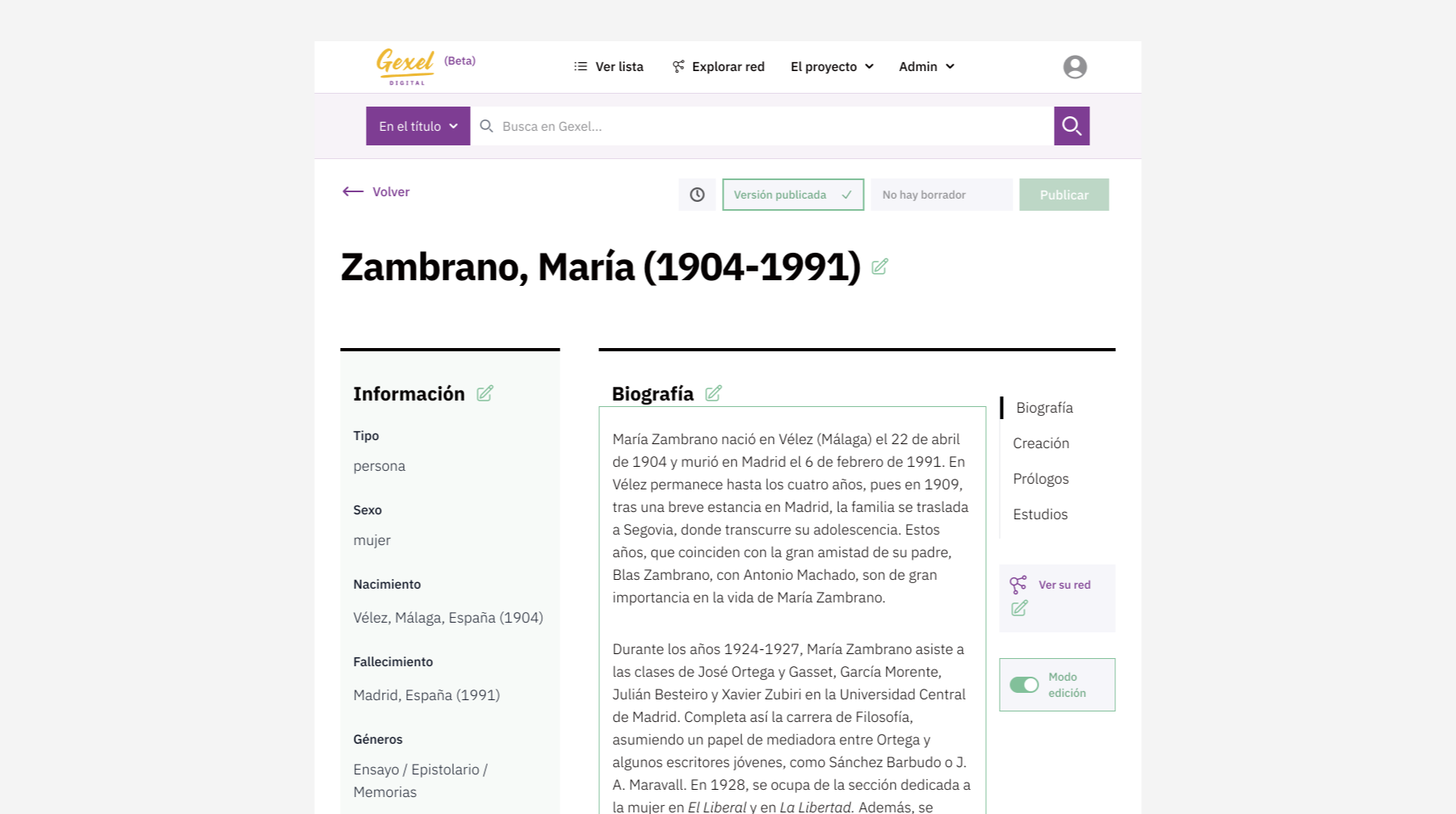
The first challenge was turning more than 3,000 pages of digital documents into structured, searchable data. The files were dense, with inconsistent formatting, page headers, columns, and decades of editorial decisions.
We trained an AI model through the API to extract clean text first, then pull out structured metadata: birth dates and places, professions, literary genres, and links to official external sources. Person by person, entry by entry.
This wasn't just digitization—it was transformation. What was once static text became a living database, ready to be queried, edited, and expanded.
Understanding how researchers work
Before designing the platform, we conducted in-depth interviews with professors and students to understand their needs and workflows.
The interviews revealed two clear requirements: easy access to individual biographies with robust search and filtering, and tools to understand relationships and networks between people in exile. Researchers also emphasized the need to update records over time as new information emerges or errors are found.
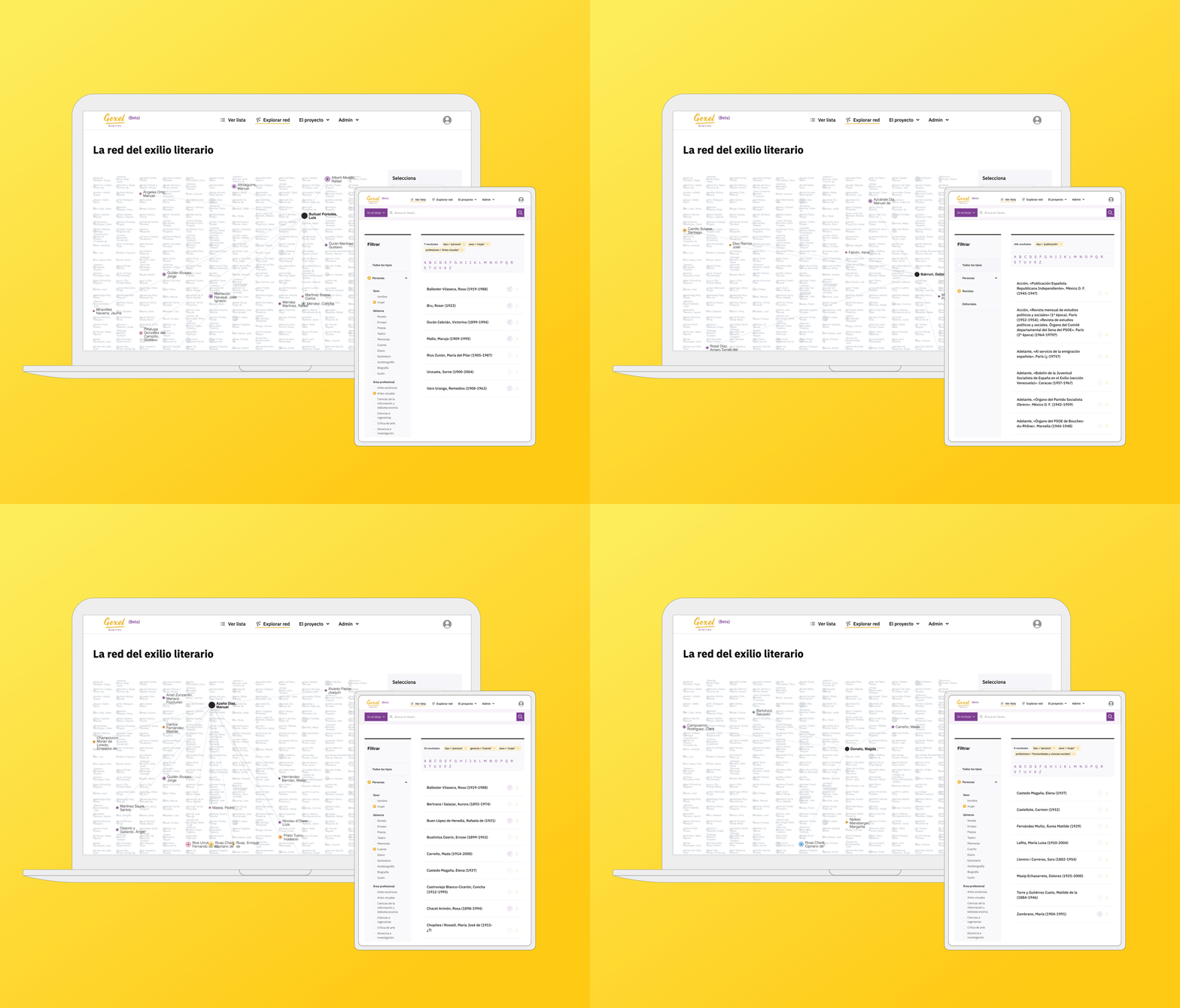
Once the data was structured, we used these insights to shape the platform. We built a searchable database with metadata and advanced filters for exploring individual entries, and we tackled a second challenge: revealing the hidden connections between people.
Building a network of connections
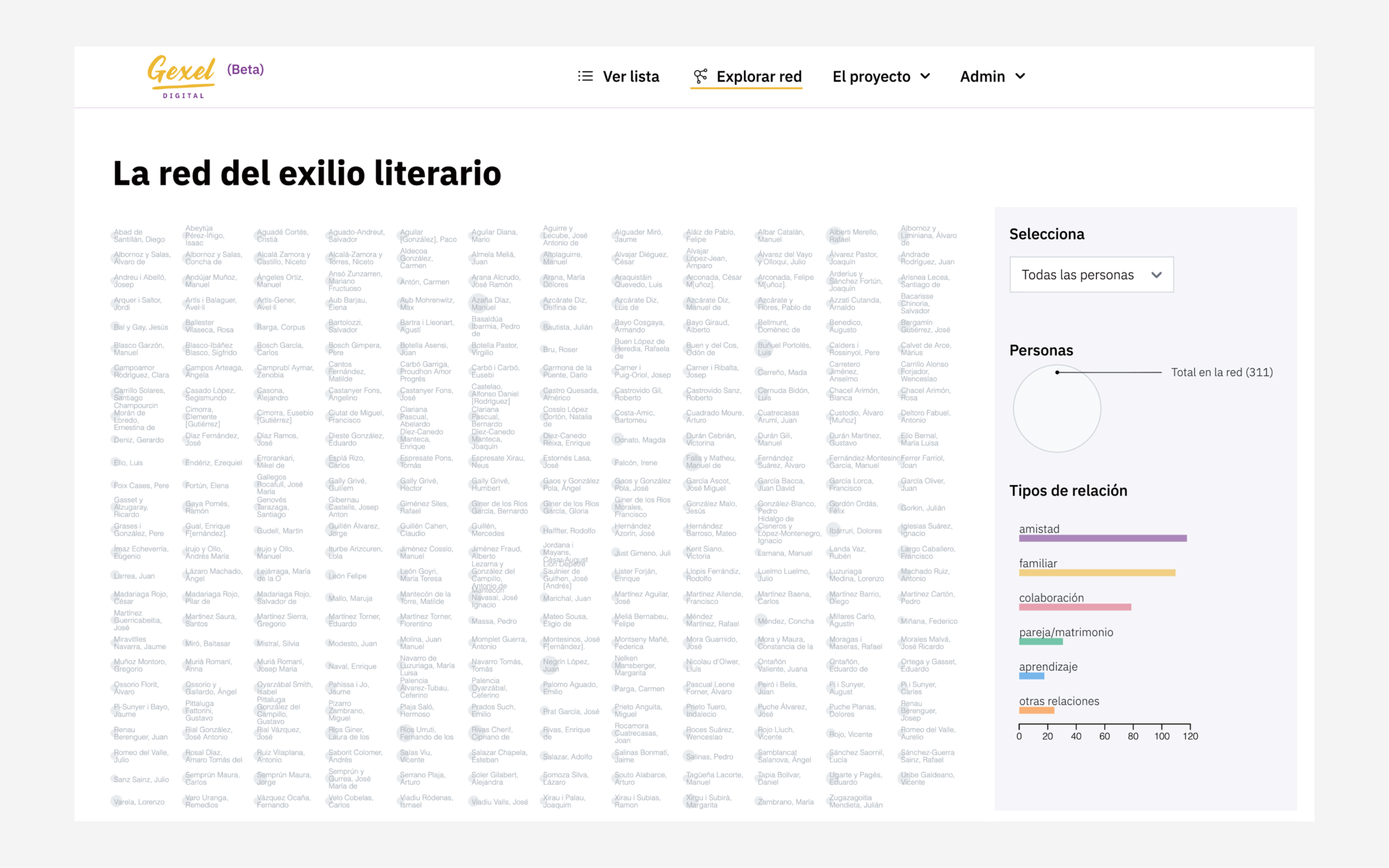
We combined our newly structured data with PARES, Spain's official historical archive, extracting relational information to build an interactive network graph where researchers can identify clusters, highly connected figures, and explore relation types—family, colleagues, friends, collaborators.
This is a different entry point into the same information. Instead of focusing on individual trajectories, it reveals the community: how people connected, where influence flowed, and which networks sustained cultural production in exile. It covers broader use cases and enables different kinds of discovery.
A work in progress
This platform is just the beginning. The first step was making the data accessible and editable—a foundation the academic community can build on.
The next phase involves developing advanced tools: interactive exodus itineraries that trace migration routes over time, temporal maps showing where communities formed and dissolved, and timeline visualizations that connect historical events with individual journeys.
Each new feature is designed to help researchers ask better questions and find answers faster—turning decades of scholarship into new insights.
What we delivered
A complete open-access platform: user research with academic stakeholders, AI model training and data extraction, metadata structuring and database design, integration with external sources, interactive network visualization and visual analytics, responsive web development, and ongoing collaboration with the research community.
What we did
- AI-assisted data extraction
- User research
- Data modeling
- UX/UI design
- Interactive visualization
- Web development